
Highly In(visible)
An Auto-Ethnography of Sanctuary and Resistance
By Antonio D. Santos
Highly In(visible)
An Auto-Ethnography of Sanctuary and Resistance
A forthcoming book by Antonio D. Santos
What does it take to build a place of belonging in a neighborhood the world has learned to overlook, and what can that experience teach us about the power of communities to shape their own futures?
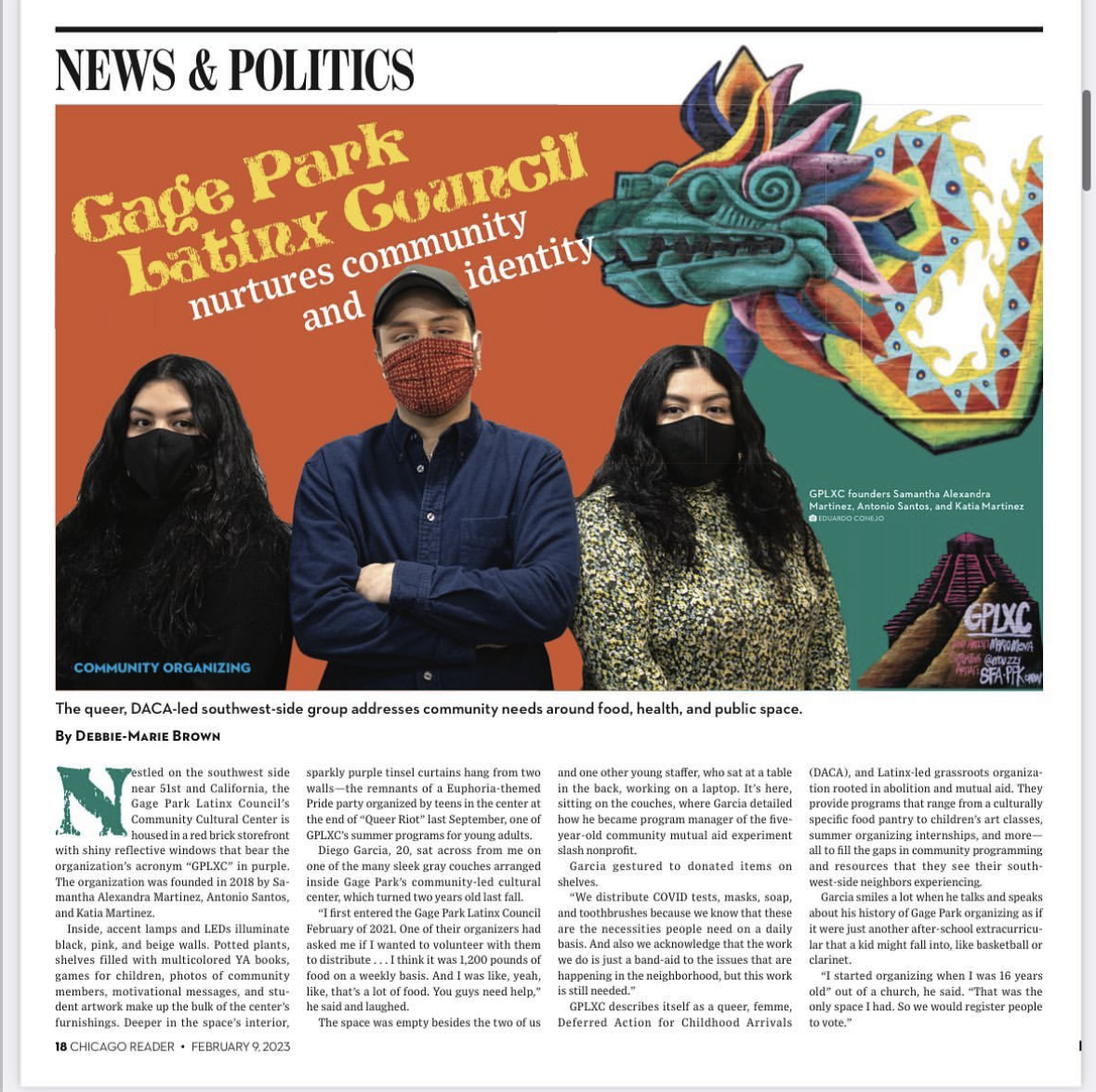
In Highly In(visible): Queer Latinx Organizing in Gage Park, Antonio D. Santos tells the story of building a grassroots, queer Latinx-led community institution on Chicago's Southwest Side. Drawing on his experience as a community organizer and his life growing up in Gage Park, Santos examines how communities create sanctuary, preserve histories that have been overlooked, and build the conditions for future generations to thrive.
Through the work of the Gage Park Latinx Council—from youth programming and mutual aid to cultural organizing and queer history preservation—this book explores what becomes possible when communities are not simply the subjects of someone else's story, but the architects of their own futures.
Part personal narrative, part community history, and part reflection on grassroots organizing, Highly In(visible) asks us to reconsider where knowledge comes from, whose histories are preserved, and what it means to build something that can outlast us.
Why I'm Writing This Book
I grew up in Gage Park. For much of my life, I saw how neighborhoods like mine were described by the outside world, and how rarely the people who called them home were given the opportunity to define their own stories.
My work as a community organizer grew from a desire to create something different: spaces where our identities, histories, and experiences were not liabilities to overcome, but sources of knowledge, connection, and possibility.
Through the Gage Park Latinx Council, I helped build programs and spaces shaped by the needs and imaginations of our community. We created opportunities for young people to explore queer history, organized mutual aid during moments of crisis, and worked to preserve stories that deserve a place in the historical record.
Writing this book is an opportunity to reflect on what that work made possible, what it demanded of us, and what it taught me about leadership, care, and collective power.
I want to document our history, but I also want to make the knowledge within it visible. The lessons of grassroots organizing do not belong only to the people who practice it. They can inform how organizations lead, how institutions understand communities, how histories are preserved, and how we imagine a future beyond the conditions we inherited.
This is the story of what we built in Gage Park, and an invitation to consider what other communities might build for themselves.
What This Work Explores
What can we learn from the communities that build their own institutions, preserve their own histories, and create possibilities where others see limitations?
Highly In(visible) explores the lessons embedded in grassroots organizing:
Grassroots leadership and collective power. What does it take to build an institution rooted in the people it serves?
Queer Latinx history and cultural memory. What changes when communities become the stewards of their own histories and younger generations discover the people who came before them?
Sanctuary as resistance. How can community spaces, cultural programs, and mutual aid become sources of protection, belonging, and possibility?
The knowledge within community work. What can organizers, nonprofit leaders, educators, and institutions learn from building something meaningful with limited resources and deep community relationships?
The experience of Gage Park is specific to its people and history. But the questions it raises about power, belonging, and collective possibility reach far beyond one neighborhood.
Follow the Writing Journey
I'm currently writing Highly In(visible) and developing a work that brings together personal narrative, community history, and reflections on grassroots organizing.
As the manuscript takes shape, I'll share selected reflections, essays, and discoveries from the writing process.
If you're interested in queer Latinx history, community-led change, or the stories that help us imagine different futures, I invite you to follow along.
The work is still being written. The history is already here.